We settled into our table seats on a Trans-Pennine train.
There was a minor confusion over where the passengers for the other two seats were sitting. One man, his head already down on the table ready for sleep, was interrupted by a new passenger. Seems the newcomer had reserved the window seat, and the would-be sleeper was already there. Amicably enough, they changed seats and the first man tried to return to his forty winks.
Barely out of Sheffield station, the window seat man smiled over and asked if we’d been anywhere nice. How committed to a response should we be?
“Er, yes,” we replied, “Sheffield”.
That’s where he’d just joined the train, but he wasn’t to know we’d sat down only moments before he joined us.
“OK…what was nice in Sheffield?”
“We’ve just been to the Transplant Games. There since Thursday.” It was now Monday.
“Transplant Games? What’s that?”
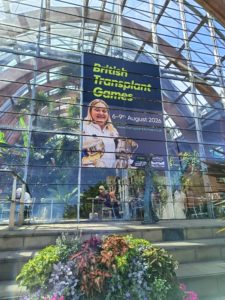
We opened the first layer of the story. Games held every year in a different city in the UK, all competitors had some form of organ transplant. Great opportunity to meet together and share each other’s stories, and enjoy some good sport.
“What about you? Anywhere nice?” we asked, unsure about how much more he’d want to explore organ donation. It’s not everybody’s chosen topic for a sunny afternoon train journey.
“Scarborough, with my partner. We had a good time. Nice place. Good sunset last night, lovely coastline.”
Our new friend was a farmer, with a long enough journey home ahead of him. We chatted about farming, with no particular expertise from us. Like many, he is concerned about its future, how to make it pay, who will take it on after him. Family are involved but the economic climate isn’t the same. The other climate is a bit of a mess as well.
The train smoothed its way along the Hope Valley Line, past rugged gritstone edges and broad, green farming valleys. We were on the best side of the train for the views and the Peak District can hold our attention.
Unless there’s a worthy competitor…
“Transplant Games then. Do you have to have had a transplant to go there?”
“No, we go as supporters, and well over a thousand others did too. The competitors have all had transplants. The other group that attends, and in increasing numbers each year, are the live donors, and the families of donors. There are also opportunities for live donors to compete.
The teams all parade into the opening ceremony – hospital teams, people compete for the hospital where they had their transplant. They are all stars, champions before they start. They’ve all been through a tough, tough experience to reach the Games, some much more so than others. The applause is wild. But the last group to parade in is those donor families and live donors. Then the roof comes off. There’s a long, standing ovation, always is. It’s a very emotional moment. We know it’s coming every year but that doesn’t stop the tears. Hard to hold them back even now. Without those people, and thousands like them, without their courage and kindness, no one else would be there. Hard as it is for them, they can be more than proud.”
“Sounds impressive. I suppose it provides opportunities for sport for people who wouldn’t usually have that? I imagine they couldn’t compete with other people who hadn’t had transplants.”
“Some couldn’t, that’s true, but the quality of sport from many of them can be outstanding. Many do compete, swim, run, whatever, with other sports clubs. There needs to be some recognition of their abilities and personal bests at a wider level to give them the respect they are due. Then many go to the World Transplant Games, every two years, hosted in different countries.
But the support and applause is often stronger and louder for the people who struggle most to complete their race, or their competition. Their efforts are recognised. Massive. It’s very moving. Maybe they could be called the Kindness Games.
It encourages recipients to keep themselves as fit as possible, and to compete with others who have experiences in common. It’s also about raising more public awareness of the need for donors, and the importance of having conversations about our decisions with family and friends. There’s a Saturday evening “donor run/walk” organised as part of it every year. That does its job best when it goes through public spaces in the city. We did that this year, around the city centre. This one was the biggest event of any of the UK Games. Over 2,500 people in it. In fact, it was the biggest UK Transplant Games ever. Over 1,000 competitors and more than 1,500 supporters and spectators, even before including the Donor Run – which could never be left out.”
“Sounds fantastic. I’m happy to be a donor after I die. What else is anyone going to do with my organs? Makes sense to help someone else have a good life, rather than sending them off to the graveyard or the crematorium. I think I signed that on a form, ages ago.”
“Excellent – thank you. Do your family and friends know about your decision?”
“Don’t think so. Nothing to do with them. Aren’t we all potential donors now, after the law changed?”
“Potentially, if we die under the right circumstances, and 99% of us don’t. But the medical teams won’t proceed unless they have clear consent from the family, or someone close if there is no family.”
“What business is it of theirs? My organs, my decision, isn’t it?”
We talked some more about the sensitivities of removing organs without agreement from the family or, dreadful thought, against their wishes. It’s not the way it works here. And if that question is raised by a medical team it’s better to know what the deceased person would choose themselves than have to unpack all the pros and cons alongside a life support machine, with the clock ticking.
“Makes sense, I suppose. I’d better tell somebody. So, if you’ve not had transplants yourselves, what takes you there?”
That part of the conversation was held, and kindly, as we left the Pennines and entered the urban surroundings of our destination.
The fourth man at the table slept on as we stood up to leave. We shook hands with the man in the window. Said our goodbyes. (We don’t know if you’ll ever see this, but if you do we hope we’ve done you justice. Good luck with the farm, and thanks for an engaging conversation…)
This is organ donation week. Could you please help us open some more conversations? Thank you…