All that remains to be said…

As Organ Donation Week 2026 closes this evening, just a couple more words to add…and repeat…

Thank you.

Thank you to all who told their stories so bravely and honestly this week.

Thank you to our guest bloggers, for the incredible work you do, and your kindness in telling us about it.

Thank you to those who found the blogs, who not only liked a photo but read the blogs to the end.

Thank you to those who “liked”, commented, and reposted blogs for this week, from Live Loudly Donate Proudly and from many other groups and individuals promoting organ donation.

Thank you to those who spoke to the journalists and braved the publicity of the TV and radio.

Thank you to those who cycled for the cause (even going nowhere in Grand Central Station) peddling their stories.

Thank you to those who climbed the peaks of various nations and waved a flag for organ donation.

Thank you to those who lit up their council buildings, shopping malls, universities, castles, cathedrals, hospitals and homes in shining pink.

Thank you to those who painted, sang, wrote poems, poured their creativity into stimulating conversations that may save lives.

Thank you to those who wore pink to school or work,  ran coffee mornings, baked cakes, gave out leaflets.

Thank you to those who taught organ donation awareness classes in schools, opened opportunities for young people to engage, explore, lead.

Thank you to those who decided this week to sign the register as potential organ donors.

Thank you to those who have let their families and friends know of their decision.


Thank you to live donors, and to donor families.

Thank you to the medical teams, and administration and logistics teams who make transplants possible.

Thank you to recipients, of all ages, for your amazing spirit, your courage, your resilience and determination.

Thank you to parents and siblings, families and friends, in the neverending circle of love and support.

Thank you to NHS Blood and Transplant Donor Family Care Service, helping pass on letters of gratitude and communacating between recipients and donor families.

Thank you to all those support groups and charities, who inform, educate, encourage, and are there when needed.

Thank you to all who have made the space, given time, listened and supported, making this week so valuable.

Thank you to all those not mentioned here but just as caught in the whole web of the transplant world.


Thank you, in the name of the more than 8,690 people on the Active Transplant List, waiting for a call…

Thank you, in the name of the thousands and thousands of people who are alive today in Britain and Ireland because of the kindness of donors.

Thank you, in the name of those whose precious lives were lengthened and extra time enjoyed with all those they love, thank you.


And again, to the donors…

“Thank you for the days
Those endless days, those sacred days you gave me
I’m thinking of the days
I won’t forget a single day, believe me
I bless the light
I bless the light that lights on you, believe me…”    (Ray Davies, The Kinks)

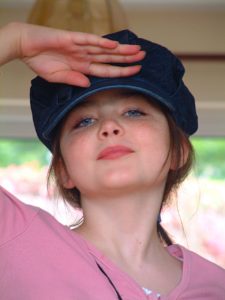
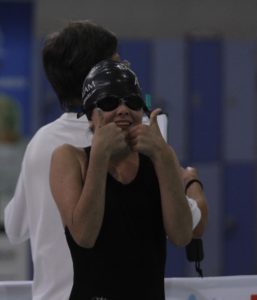
Lucia in Pretty woman hat, salute


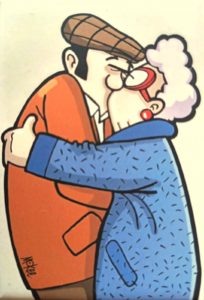
The Snog…for organ donation week…

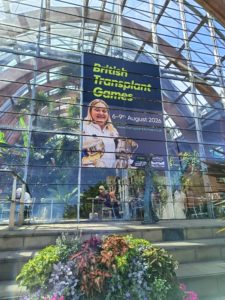
The Transplant Games in Sheffield this year (August), introduced many of us to Sheffield’s well-loved local artist, Pete McKee.  Pete is a contemporary artist and cartoonist, best known for his nostalgic and humorous paintings of Northern working-class life.

In 2013, on the gable end of Fagan’s pub, in Broad Lane, Sheffield, Pete painted a larger-than-life image of an elderly couple “embraced in a kiss”, as some would say.  “Having a snog”, say others, and that’s the title it was given – The Snog.

PMK The Snog

Its fame spread rapidly and Frank and Joy, as they were named, have become a popular backdrop for couples and newlyweds posing for their own photographs.   It’s a local landmark, iconic of Sheffield, with its fame travelling beyond South Yorkshire in the hearts – and merchandise – of tourists returning home, and student graduates looking for souvenirs of their adventures in the local university.

Then, in April 2024, it was gone.  Taken off, as the pub wall was in desperate need of TLC, and new rendering.  Locals were worried it would be gone for ever, and the pleasure and joy it had given to thousands of people would be no more.

Not so.  A month later Pete repainted it (twice, after heavy rain prevented the full recovery of the first attempt).  Back, but with a few changes.   “I took the opportunity to give Joy a new hairdo and get her a new coat,” Pete said.  “The mural looks lovely and vibrant now and is set for the next 20 years – and more, hopefully.”

Pete knows well the drama of needing TLC and then coming back, with a few changes.  A hereditary condition affecting his lungs and liver led to  a life-saving liver transplant in 2017.  Pete’s donor was Mark Piotr, and Mark’s widow, Karen was with him at the Transplant Games.

Since her husband died, and while living with her grief, Karen has become a passionate advocate for organ donation, and serves as chair of the organ donation committee at Bradford Royal Infirmary.

In an interview for BBC News this week, as part of Organ Donation Week, Karen said,  “It’s quite a strange conversation to be able to recall when you’re in an intensive care ward. But I just immediately turned around and said, ‘you know, we’re organ donors, don’t you?’

“There are eight people now alive having that second chance of life because I knew his decision and I was happy to honour it.”

Pete learned that Mark loved playing golf, so he decided to take it up himself.  The Sheffield Transplant Games was Pete’s fourth, competing as a golfer.

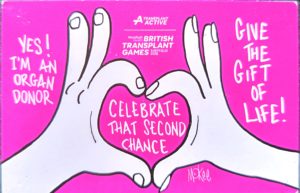
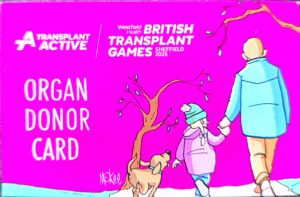
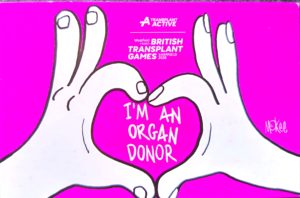
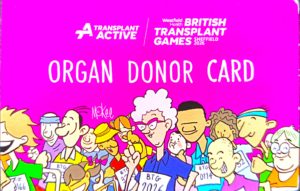
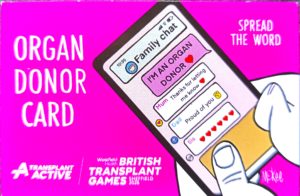
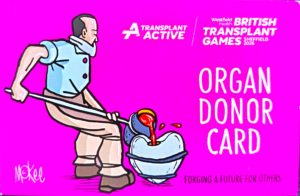
Pete has now used his artistic talents to live his gratitude to Mark and Karen Piotr by “paying it forward” and designing six new versions of the Organ Donor card to encourage more people to sign up to the national register.  The cards can be talking points to let people know if you are a donor and maybe encourage others to think about signing up to be a donor too.  Limited sets of the cards were available at the Games and, in Pete’s unique style, echo some of the local Sheffield stories, not least in the steelworker pouring molten steel into a heart-shaped mold.

PMK 1  PMK2

PMK3  PMK4

PMK5  PMK6

PMK7

https://register.organdonation.nhs.uk/start

If you were designing an organ donor card with a local touch, or some other eye-catching chance to encourage others to think about organ danotion, what would you do?

For a lighter touch to finish, Pete is also the founder of a band that played at the opening ceremony of the Games.  The Everly Pregnant Brothers are a very popular and wildly daft comedy parody ukulele band, rewriting famous pop and rock songs with particular South Yorkshire humour.  They’re easy enough to find in that internet thing…

“They are my heroes…”

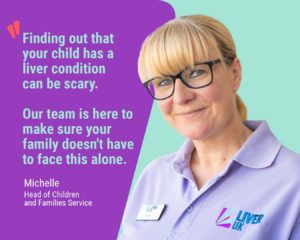
One more guest blog for Organ Donation Week, from our good friend, Michelle…

Live Loudly, Donate Proudly

I was recently chatting to David, Lucia’s wonderful Daddy. We were talking about what I do, the support we provide, and the privilege it has been to know Lucia and to continue to be part of her lovely family’s lives.

Our conversation made me stop and think about the nature of my role and the extraordinary privilege of working with so many amazing children, young people and families affected by childhood liver disease.

It also made me reflect on Lucia – her journey, what she meant to me and to my team, and the message she left behind: live loudly, donate proudly.

There is no expected journey with childhood liver disease. Over the years, through my work with families, I have witnessed so many different pathways. Some are filled with joy and milestones; others are incredibly difficult and, sometimes, devastating. But every one of these journeys is extraordinary because of the adversity that children and young people, their siblings and their parents can face.

Lucia’s family have experienced the unimaginable loss of their daughter. Yet they continue to be such a shining light within our liver community. I know that must take enormous courage, particularly when so much of what they do can bring back memories of the daughter they lost.

But Lucia’s family want her life to be celebrated. They want her story to continue to make a difference. And they want the message of organ donation to be heard.

Because Lucia was given the gift of a liver transplant. That gift gave her the opportunity to live loudly – to experience life, to make memories, to love, to laugh and to make an impact on the people around her.

It just wasn’t long enough.

That is why the message of Live Loudly, Donate Proudly is so important. Lucia’s story reminds us that organ donation really can give someone the gift of time and the opportunity to live a life that might otherwise not have been possible.

And so, every day, I count my blessings for my eight years as Head of the Children and Families Service – first with Children’s Liver Disease Foundation and now with Liver UK – and for the privilege of being part of the lives of so many amazing children, young people and parents, just like Lucia.

Why do I consider it a blessing?

Because every day I see children and young people living with something they never asked for and, often, cannot control. I see their dignity, their bravery and, above all, their resilience.

They face challenges that many people will never have to experience. They have hospital appointments, procedures, medication, uncertainty and sometimes major surgery or transplantation. They have to live with a condition that can shape so much of their childhood and adolescence.

And yet they keep going.

Of course, it isn’t always easy. There are the “why me?” moments. There is frustration, sadness, fear and anger. There can be a huge emotional toll, and those feelings can return at different points throughout their lives.

I feel incredibly lucky that my role means I can be alongside them during some of those moments – listening, helping, advocating and trying to make things just a little bit easier.

I also think often about siblings.

Life can sometimes revolve around the child with liver disease. Parents are doing everything they possibly can to care for all of their children, but hospital stays, appointments, emergencies and the needs of a poorly sibling can inevitably take up so much space.

Siblings can find themselves feeling as though they are never quite at the top of the priority list, even when their parents love them just as deeply. And, at the same time, the child with liver disease may simply wish they could be like their brother or sister – healthy, carefree and able to do the things that other children take for granted.

It is a complicated and often painful conundrum, and there is no simple solution.

And then there are the parents.

I have an unwavering admiration for the parents I work with. They live with an uncertainty that no parent should have to face. They can feel completely out of control, anxious and frightened about what the future might hold. They want the very best for every one of their children and somehow keep going, even at times when they feel they have nothing left to give.

They often put themselves last.

They are always ready for the next appointment, the next hospital admission, the next treatment, the next challenge. I know how hard it can be. I know that sometimes they wonder how they will keep going.

But somehow, they do.

They are my heroes.

Actually, I am in awe every day of everyone I work with – children and young people with liver disease, their siblings and their parents. There is so much for them to deal with, and while I would never want to suggest that they simply have to be brave or resilient, I see every day the incredible strength it can take to navigate life with childhood liver disease.

And on the days when it all becomes too much, that is where we come in.

We cannot take the liver disease away. We cannot make every difficult decision easier or remove every fear. But we can listen. We can provide practical support. We can help families feel less alone. We can share the burden, even if only for a little while.

It is our privilege to do so.

Sadly, there are also days when the children and young people we know and love become so unwell that they do not survive.

We felt this most deeply when Lucia died in 2020.

Lucia’s death changed the lives of everyone who knew her. For me, and for my team, it was an incredibly painful reminder that while we hope for the very best for every child and young person we support, we cannot always change the outcome.

But Lucia’s life continues to make a difference.

Her family have chosen to keep her light shining. They want Lucia to be remembered for the way she lived, not simply for the way her life ended. They want people to understand the difference that organ donation can make. And they want other young people to have the opportunity that Lucia was given – the opportunity to live.

So when I think about Lucia, I don’t only think about the sadness of losing her.

I think about her laughter. Her determination. Her impact. The people she inspired. The difference she made. And the legacy she has left behind.

Live loudly. Donate proudly.

For Lucia, those words were more than a campaign.

They were a way of living.

And they are a reminder that every life matters, every moment matters, and that the decision to donate our organs could one day give someone else the most precious gift of all – the gift of more time.

For Lucia.
For her family.
For every child and young person waiting for a transplant.

Live loudly. Donate proudly.
IMG-20260925-WA0007


Ripples Along the St. Lawrence River…

Our third guest blog, from another young friend, Doroti Polgár…

When I was fifteen years old, Live Loudly Donate Proudly invited me to write a blog about my experiences as the sibling of a liver transplant recipient. Within the task of a short blog, I felt for the first time that my perspective was valued and that I should share it with anyone willing to listen. This welcoming, empowering space is one that Lucia created: one where young people can find their voices. And I began to feel as though I was finding mine.

Since then, writing has become an important part of my life and Lucia’s family have continued to support me. In 2023, I performed my poem ‘Dear Justin (A Tribute to My Brother’s Organ Donor)’ at the opening ceremony of the British Transplant Games and began studying English Literature at the University of St Andrews in Scotland. It was there that I received a place on the Laidlaw Scholars Leadership and Research Programme (a two-year scholarship designed to develop research and leadership skills).

The programme’s first requirement was to conduct an original research project, and I used this opportunity to address a need for improved communication between young adult patients and medical professionals. In the early stages of the project, I spoke with David and Rachel and they were incredibly encouraging, even sending me a copy of their friend Janet E McDonagh’s poetry collection Airgaps are Allowed. I used one of her poems, ‘Adolescent Clinic’, as an example of contemporary poetry that highlights the importance of recognising young adult patients as people with their own interests and dreams before starting medical conversations. You can find the whole essay (including contributions from young adults and medical professionals who participated in interviews) and accompanying research poster through the following link: Self-Advocate and Listen: Examining the Importance of Contemporary Poetry to Improving Communication between Medical Professionals and Young Adult Patients | Laidlaw Scholars Network.

The second requirement of the programme was the Leadership in Action project, a fully-funded opportunity to volunteer with any charity based overseas for six weeks this summer. I knew immediately that I wanted to connect with an organ donation charity and called David to ask if he had any recommendations. “Have you heard of Chain of Life?” was his response.

Chain of Life is a charity based in Quebec, Canada, that works to educate secondary school students (aged 15-17) about organ and tissue donation. David explained that, thanks to teacher Seána Maguire, Lucia had met Chain of Life’s founder and president, Lucie Dumont, during her visit to Belfast in 2018.

I was put in contact with Lucie and learnt that following Chain of Life’s success with their existing English as a Second Language (ESL) programme in Quebec, they are currently developing a new English Language Arts (ELA) programme for students whose first language is English. As this involves using literature and creative writing to educate students about organ donation, it felt like the perfect time to connect and make a meaningful contribution to their work.

I spent six weeks in Quebec between May and June, the St. Lawrence River remaining a constant backdrop to my journey as I arrived in Montreal and gradually travelled to the birthplace of Chain of Life, Rivière-du-Loup (staying in Drummondville and Québec City along the way). Each week, I lived with Chain of Life teachers who kindly welcomed me into their homes and classrooms. It was a privilege to be a part of the hard work and belief that goes into developing and delivering new and engaging resources for lessons on the different aspects of organ donation.

While some resources remain in development, such as our work on Maylis de Kerangal’s novel Mend the Living, most lessons were planned collaboratively and delivered to students immediately. Their responses, questions, and feedback informed the development of each new lesson. Activities included celebrating life and fostering empathy through poetry, close reading organ donation campaigns to develop media literacy, creating a safe space to understand family refusals, planning events and campaigns to address the importance of health and prevention, and writing letters to medical professionals, governments, and pedagogical professionals to understand their roles in organ donation, and share concerns, questions, and ideas.

Each activity was designed to give students accurate information and, just as importantly, the chance to express their own perspectives. The students were creative, empathetic, curious, and genuinely determined to make a change. In the process of writing an extended report about my experience with Chain of Life (which will be published soon on the Chain of Life website), I read all of the hundreds of handwritten responses from students to each activity and reflected on how they can contribute to the future of organ donation education. Listening to the students’ voices was just as important as teaching them. This experience was a conversation between me, the teachers, and the students – a conversation that grew throughout six weeks and one that I will carry with me as I continue to contribute whatever I can to educating more students about organ donation.

At the end of my time in Quebec, I was interviewed about my experience with Chain of Life, and I am grateful to have been able to speak about Lucia and her family’s role in making it happen. You can watch the video here: Doroti Polgár: Joining Chain of Life – A Journey into Organ Donation Education | Videos & Movies on Vimeo.

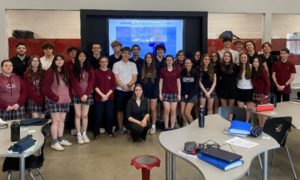
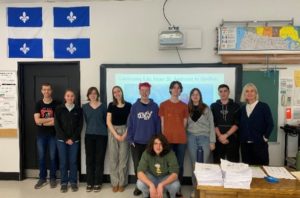
   Doroti Ploger Chain of Life students and teachers Quebec      Doroti Polger Chain of life students and teachers Quebec (1)
Doroti with students and teachers: Chain of Life, Quebec

Lucia’s passion for education about organ donation and belief in young people left a ripple effect that led me to Chain of Life and along the shores of the Saint Lawrence River. It led me to teachers and students who share her commitment to nurturing open conversations about organ donation within classrooms and families. I wish that she could see how loudly her light continues to travel and hope that she would be proud.

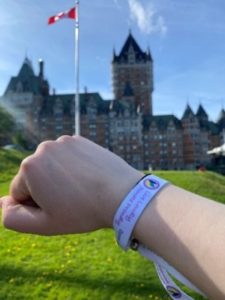
Doroti Polger and Live Loudly Donate Proudly wristband QuebecProudly wearing a Live Loudly Donate Proudly wristband by the Château Frontenac, Québec City
Thank you to David, Rachel, and Alice for your constant love and support, and for inviting me to write this blog.

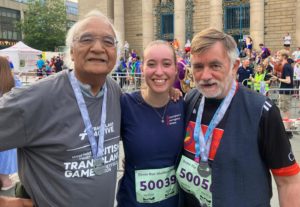
Inderjit, Doroti, David, Sheffield Games 2026 cropInderjit, Doroti, David: Transplant Games, Sheffield 2026
“Organ Donation, Mental Health and the Power of a Second Chance…

Our next guest blog this week is from a friend who has not only successfully raised funds supporting work with addiction and mental health, but also works hard to chip away at the associated taboos and silences…

When I was asked to write something for Organ Donation Week, I wondered at first how I could connect it with the work I have previously done around addiction and mental health.

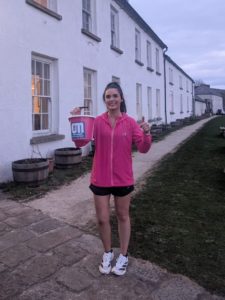
Orlagh (B crop2)

The more I thought about it, the more I realised just how close the connection is.

At the heart of both are people.

People with stories, real struggles and hardships, hopes and, sometimes, a need for a second chance.

Whilst fundraising for addiction and mental health, I began to understand the importance of looking beyond the label. It is all too easy to see someone struggling against either a mental illness or an addition and to forget the person behind it.

For me, this was very close to home and each step of the way I was thinking of those closest to me. My goal was to help start a conversation with the hope of breaking the stigma.

In life every person has a story, and their circumstances do not define their worth.

I believe organ donation encourages us to look beyond the medical procedure and see the person too.

For someone receiving an organ, it can mean far more than an operation. It can mean time to recover, to spend with loved ones, to make plans and to experience life again and moments that their illness may have taken away.

It can also mean hope.

But receiving a transplant can also bring emotional challenges. There can be anxiety, uncertainty and fear about the future. A second chance does not mean that someone suddenly stops struggling emotionally.

That is why I think mental health deserves to be part of the conversation around organ donation.

We should talk not only about saving lives, but about supporting people afterwards recognising the emotional journey alongside the physical one.

This is something I have learned through my work around addiction too. Recovery is rarely simply about getting through something. It is about rebuilding, finding hope and believing that the future can be different.

Perhaps that is the strongest connection between these subjects.

A second chance is not simply about surviving. It is about having the opportunity to live.

Organ Donation Week gives us the opportunity to think about the incredible difference one person can make to another.

It reminds us to challenge stigma, to talk openly about mental health, and to see the person rather than the diagnosis, illness or label.

Ultimately, organ donation is about people helping people.

And perhaps there is no greater expression of hope than giving someone the possibility of tomorrow.

If I can leave a lasting message it is to love those around you while you can, and remember to show yourself that same kindness.

Life loudly donate proudly 💜

Orlágh Cecil

Orlagh (A crop)


“Dear [Blank], Thank you…”

A guest blog for Organ Donation Week 2026, from Andy Prigg…

Last year I wrote about the ring I wear every day, and the words engraved on it: Ad astra per aspera. This year I want to write about a conversation, and a piece of paper that only 1 in 10 recipients ever pick up a pen for.

This year I want to talk about the importance of saying thank you — particularly to donors, and to donor families.

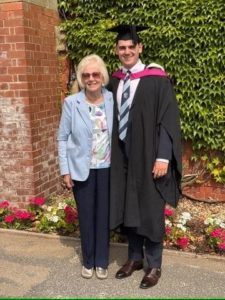
This year also brought its own milestone worth marking — a graduation, from a degree I did in the same year as my transplant

Andy Prigg graduation 2026

The background

Since I last wrote, I’ve spent two months with the transplant team in Oxford. It was truly brilliant; cutting-edge science, delivered by excellent clinicians, and it was a privilege to be part of it. But I noticed something while I was there, something I keep coming back to: the people at the centre of the whole process are so often kept in the background. The recipients get the headlines. The science gets the funding announcements. But organ donation can only happen at all because of the generosity of donors — and that generosity so rarely gets acknowledged directly, by name, by the people it saved.

Saying thank you

I wrote my letter to my donor’s family at the earliest opportunity I could. But most people don’t. The more I’ve learned through my work on this project, the less that surprises me — and the more it troubles me.
There’s a tension I sit with often: knowing how much a letter can mean, and knowing exactly why so few people manage to send one.

Talking to donor families

I recently met the mother of a donor.

We spoke a lot about letters. She told me they don’t need to be complicated — they can be as simple as saying thank you. That simplicity is easy to forget when you’re the one holding the blank page, agonising over every line, worried about getting it wrong. To her, “wrong” wasn’t really the risk.  Silence was.

Since losing her son, she has channelled that loss into the Will Houghton Foundation, campaigning to raise awareness of organ donation and to support donor families — work that’s easy to overlook if you’re not looking for it, and impossible to overlook once you’ve met the person behind it.

One thing she was clear about: there’s no expectation of a response. Writing isn’t a transaction. But it closes a circle, for the family who gave, and, I think, for the recipient too.

The reality is nothing like the reunions TV likes to make out. Most donors and recipients never meet, and most families never get more than a letter, mediated and anonymous, passed through the transplant coordinators. That letter might be the only piece of the recipient’s life a donor family ever sees. It matters more, not less, because of how little else there usually is.

Oxford, and the other side of the science

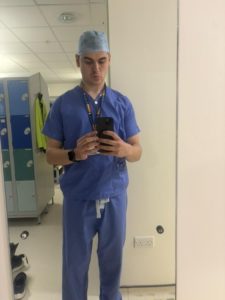
Two months with the transplant team in Oxford was brilliant, and exhilarating – if not tiring!

Andy Prigg scrubs

The middle of the night/ early morning in Oxford

But more than the science, I found myself thinking about the people the process runs through — not just the recipients, but the donors, and the families left behind who said yes at the worst possible moment of their lives.

The research

Right now, I’m working with NHSBT on a study looking at why so few UK recipients write to donor families. The figure that’s stayed with me since I started is this: only around 1 in 10 recipients ever write. Not because they don’t want to (most say they do) but because of things like:
● Fear of saying the wrong thing, or not enough
● Guilt at being the one who lived
● Not knowing whether a letter will help a grieving family or reopen a wound
● Simply not knowing where to start, or that it’s even possible

Knowing all of this professionally sits alongside something I already know personally, from having written mine. It wasn’t easy, even when I was sure I wanted to do it — which is exactly why I understand why so many people, who are just as grateful, never quite manage to.

If there’s one thing I want this post to do, it’s to gently push back on those barriers directly: if you are reading this, and you’ve received a donation, please consider writing.  I think it matters enormously.  There is no wrong time to send it — not six weeks after, not six years after. And it doesn’t need to be profound. It can be as simple as thank you. From everything I’ve learned through this project, and from families like Will’s, that’s very often enough — sometimes it’s everything.

What’s changed since I wrote last year isn’t the gratitude — that hasn’t moved.  What’s changed is that I now feel well enough to start trying to make some positive change. NHSBT’s own Pass It On campaign has always been built on that same idea — that the most powerful thing any of us can do is pass the conversation on to someone else.

Closing

This Organ Donation Week, I want to encourage the conversation Live Loudly Donate Proudly has always stood for — not just the conversation about registering, but the one that comes after.  The one on the other side of “yes.”

Because through hardship, we can reach the stars.

I’d ask anyone reading this who hasn’t yet written: don’t wait for the right time. There isn’t one — just the next one.

Please, if you have any questions or need any help in writing, don’t hesitate to reach out.

https://www.nhsbt.nhs.uk/how-we-help/donor-family-care-service/
donor.familycare@nhsbt.nhs.uk

Brief encounter…

We settled into our table seats on a Trans-Pennine train.

There was a minor confusion over where the passengers for the other two seats were sitting. One man, his head already down on the table ready for sleep, was interrupted by a new passenger. Seems the newcomer had reserved the window seat, and the would-be sleeper was already there. Amicably enough, they changed seats and the first man tried to return to his forty winks.

Barely out of Sheffield station, the window seat man smiled over and asked if we’d been anywhere nice. How committed to a response should we be?

“Er, yes,” we replied, “Sheffield”.

That’s where he’d just joined the train, but he wasn’t to know we’d sat down only moments before he joined us.

“OK…what was nice in Sheffield?”

“We’ve just been to the Transplant Games. There since Thursday.” It was now Monday.

“Transplant Games? What’s that?”

Keeleigh JohnsTransplant Games Sheffield 2026 (1)

We opened the first layer of the story. Games held every year in a different city in the UK, all competitors had some form of organ transplant. Great opportunity to meet together and share each other’s stories, and enjoy some good sport.

“What about you? Anywhere nice?” we asked, unsure about how much more he’d want to explore organ donation. It’s not everybody’s chosen topic for a sunny afternoon train journey.

“Scarborough, with my partner. We had a good time. Nice place. Good sunset last night, lovely coastline.”

Our new friend was a farmer, with a long enough journey home ahead of him. We chatted about farming, with no particular expertise from us. Like many, he is concerned about its future, how to make it pay, who will take it on after him. Family are involved but the economic climate isn’t the same. The other climate is a bit of a mess as well.

The train smoothed its way along the Hope Valley Line, past rugged gritstone edges and broad, green farming valleys. We were on the best side of the train for the views and the Peak District can hold our attention.

Unless there’s a worthy competitor…

“Transplant Games then. Do you have to have had a transplant to go there?”

“No, we go as supporters, and well over a thousand others did too. The competitors have all had transplants. The other group that attends, and in increasing numbers each year, are the live donors, and the families of donors. There are also opportunities for live donors to compete.

The teams all parade into the opening ceremony – hospital teams, people compete for the hospital where they had their transplant. They are all stars, champions before they start. They’ve all been through a tough, tough experience to reach the Games, some much more so than others. The applause is wild.  But the last group to parade in is those donor families and live donors. Then the roof comes off. There’s a long, standing ovation, always is. It’s a very emotional moment. We know it’s coming every year but that doesn’t stop the tears. Hard to hold them back even now. Without those people, and thousands like them, without their courage and kindness, no one else would be there. Hard as it is for them, they can be more than proud.”

“Sounds impressive. I suppose it provides opportunities for sport for people who wouldn’t usually have that? I imagine they couldn’t compete with other people who hadn’t had transplants.”

“Some couldn’t, that’s true, but the quality of sport from many of them can be outstanding. Many do compete, swim, run, whatever, with other sports clubs. There needs to be some recognition of their abilities and personal bests at a wider level to give them the respect they are due. Then many go to the World Transplant Games, every two years, hosted in different countries.

But the support and applause is often stronger and louder for the people who struggle most to complete their race, or their competition. Their efforts are recognised. Massive. It’s very moving. Maybe they could be called the Kindness Games.

It encourages recipients to keep themselves as fit as possible, and to compete with others who have experiences in common. It’s also about raising more public awareness of the need for donors, and the importance of having conversations about our decisions with family and friends. There’s a Saturday evening “donor run/walk” organised as part of it every year. That does its job best when it goes through public spaces in the city. We did that this year, around the city centre. This one was the biggest event of any of the UK Games. Over 2,500 people in it. In fact, it was the biggest UK Transplant Games ever. Over 1,000 competitors and more than 1,500 supporters and spectators, even before including the Donor Run – which could never be left out.”

“Sounds fantastic. I’m happy to be a donor after I die. What else is anyone going to do with my organs? Makes sense to help someone else have a good life, rather than sending them off to the graveyard or the crematorium. I think I signed that on a form, ages ago.”

“Excellent – thank you. Do your family and friends know about your decision?”

“Don’t think so. Nothing to do with them. Aren’t we all potential donors now, after the law changed?”

“Potentially, if we die under the right circumstances, and 99% of us don’t. But the medical teams won’t proceed unless they have clear consent from the family, or someone close if there is no family.”

“What business is it of theirs? My organs, my decision, isn’t it?”

We talked some more about the sensitivities of removing organs without agreement from the family or, dreadful thought, against their wishes. It’s not the way it works here. And if that question is raised by a medical team it’s better to know what the deceased person would choose themselves than have to unpack all the pros and cons alongside a life support machine, with the clock ticking.

“Makes sense, I suppose. I’d better tell somebody. So, if you’ve not had transplants yourselves, what takes you there?”

That part of the conversation was held, and kindly, as we left the Pennines and entered the urban surroundings of our destination.

The fourth man at the table slept on as we stood up to leave. We shook hands with the man in the window. Said our goodbyes. (We don’t know if you’ll ever see this, but if you do we hope we’ve done you justice. Good luck with the farm, and thanks for an engaging conversation…)

This is organ donation week.  Could you please help us open some more conversations?   Thank you…

Lucia medway Games 2012 Thumbs up crop