Our third guest blog, from another young friend, Doroti Polgár…
When I was fifteen years old, Live Loudly Donate Proudly invited me to write a blog about my experiences as the sibling of a liver transplant recipient. Within the task of a short blog, I felt for the first time that my perspective was valued and that I should share it with anyone willing to listen. This welcoming, empowering space is one that Lucia created: one where young people can find their voices. And I began to feel as though I was finding mine.
Since then, writing has become an important part of my life and Lucia’s family have continued to support me. In 2023, I performed my poem ‘Dear Justin (A Tribute to My Brother’s Organ Donor)’ at the opening ceremony of the British Transplant Games and began studying English Literature at the University of St Andrews in Scotland. It was there that I received a place on the Laidlaw Scholars Leadership and Research Programme (a two-year scholarship designed to develop research and leadership skills).
The programme’s first requirement was to conduct an original research project, and I used this opportunity to address a need for improved communication between young adult patients and medical professionals. In the early stages of the project, I spoke with David and Rachel and they were incredibly encouraging, even sending me a copy of their friend Janet E McDonagh’s poetry collection Airgaps are Allowed. I used one of her poems, ‘Adolescent Clinic’, as an example of contemporary poetry that highlights the importance of recognising young adult patients as people with their own interests and dreams before starting medical conversations. You can find the whole essay (including contributions from young adults and medical professionals who participated in interviews) and accompanying research poster through the following link: Self-Advocate and Listen: Examining the Importance of Contemporary Poetry to Improving Communication between Medical Professionals and Young Adult Patients | Laidlaw Scholars Network.
The second requirement of the programme was the Leadership in Action project, a fully-funded opportunity to volunteer with any charity based overseas for six weeks this summer. I knew immediately that I wanted to connect with an organ donation charity and called David to ask if he had any recommendations. “Have you heard of Chain of Life?” was his response.
Chain of Life is a charity based in Quebec, Canada, that works to educate secondary school students (aged 15-17) about organ and tissue donation. David explained that, thanks to teacher Seána Maguire, Lucia had met Chain of Life’s founder and president, Lucie Dumont, during her visit to Belfast in 2018.
I was put in contact with Lucie and learnt that following Chain of Life’s success with their existing English as a Second Language (ESL) programme in Quebec, they are currently developing a new English Language Arts (ELA) programme for students whose first language is English. As this involves using literature and creative writing to educate students about organ donation, it felt like the perfect time to connect and make a meaningful contribution to their work.
I spent six weeks in Quebec between May and June, the St. Lawrence River remaining a constant backdrop to my journey as I arrived in Montreal and gradually travelled to the birthplace of Chain of Life, Rivière-du-Loup (staying in Drummondville and Québec City along the way). Each week, I lived with Chain of Life teachers who kindly welcomed me into their homes and classrooms. It was a privilege to be a part of the hard work and belief that goes into developing and delivering new and engaging resources for lessons on the different aspects of organ donation.
While some resources remain in development, such as our work on Maylis de Kerangal’s novel Mend the Living, most lessons were planned collaboratively and delivered to students immediately. Their responses, questions, and feedback informed the development of each new lesson. Activities included celebrating life and fostering empathy through poetry, close reading organ donation campaigns to develop media literacy, creating a safe space to understand family refusals, planning events and campaigns to address the importance of health and prevention, and writing letters to medical professionals, governments, and pedagogical professionals to understand their roles in organ donation, and share concerns, questions, and ideas.
Each activity was designed to give students accurate information and, just as importantly, the chance to express their own perspectives. The students were creative, empathetic, curious, and genuinely determined to make a change. In the process of writing an extended report about my experience with Chain of Life (which will be published soon on the Chain of Life website), I read all of the hundreds of handwritten responses from students to each activity and reflected on how they can contribute to the future of organ donation education. Listening to the students’ voices was just as important as teaching them. This experience was a conversation between me, the teachers, and the students – a conversation that grew throughout six weeks and one that I will carry with me as I continue to contribute whatever I can to educating more students about organ donation.
At the end of my time in Quebec, I was interviewed about my experience with Chain of Life, and I am grateful to have been able to speak about Lucia and her family’s role in making it happen. You can watch the video here: Doroti Polgár: Joining Chain of Life – A Journey into Organ Donation Education | Videos & Movies on Vimeo.
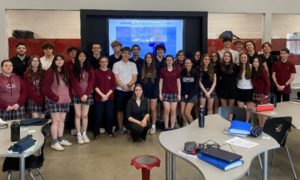
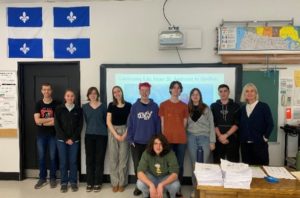
Doroti with students and teachers: Chain of Life, Quebec
Lucia’s passion for education about organ donation and belief in young people left a ripple effect that led me to Chain of Life and along the shores of the Saint Lawrence River. It led me to teachers and students who share her commitment to nurturing open conversations about organ donation within classrooms and families. I wish that she could see how loudly her light continues to travel and hope that she would be proud.
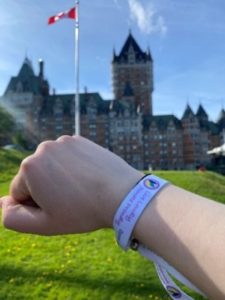 Proudly wearing a Live Loudly Donate Proudly wristband by the Château Frontenac, Québec City
Thank you to David, Rachel, and Alice for your constant love and support, and for inviting me to write this blog.
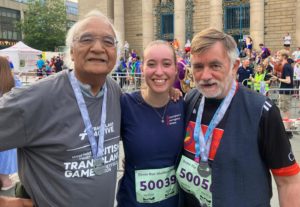 Inderjit, Doroti, David: Transplant Games, Sheffield 2026