Bags packed, and waiting…

The NHS Organ Donor Register is a confidential record of people’s choices whether to be considered a potential organ donor, or not, when they die.

The UK Transplant Waiting List is a similarly confidential database of everyone in the UK currently waiting for the opportunity to receive an organ from a deceased donor.  There are about 7,730 people on the active waiting list at this moment, almost 260 children, although the list is dynamic, changing rapidly according to individual circumstances.

It’s not a simple queue, where the first person in line receives the next available organ they need.  It is a complex matching system, using many factors to decide which person on the list has the maximum opportunity for a succesful transplant, which new host will provide the best opportunity for longevity for the precious gift of the donated organ.

Blood and tissue type must be compatible, size and age of donor and potential recipient will be considered, even how far the organ will have to be transported and how long it will be before it can be safely transplanted and become a life-giving part of another person.

When a patient is considered to be in need of a transplant, they are carefully assessed to see if they are strong enough, physically and mentally, to go through the demands of the operation and recovery.  If the wait is too long, health can deteriorate too much and the patient be considered too unwell to endure the process.  Last year over 415 people died while waiting for a transplant.

That’s some of the facts.  The real lives and emotions are another thing.  For the purpose of sensitive, accurate matching the list is anonymous.  Those who wait for the phone call are not.

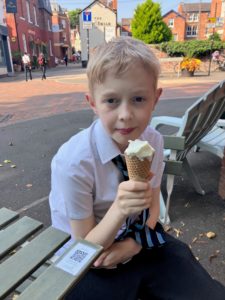
Harry is our friend.

We met him with his mum and dad, Clare and Simon, and Harry’s brother, Sam, at the Transplant Games.  Today, their bags are packed again, and they watch the clock as health weakens, daring to hope that the light of kindness can shine from the darkest hours of others.

We are grateful for permission to share Harry’s story, in Clare’s own words:

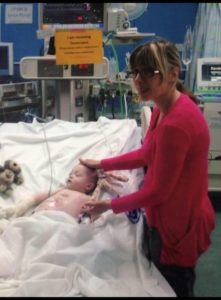
“This is Harry.

Harry

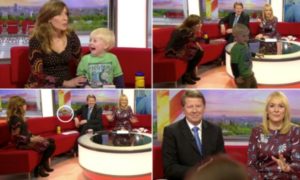
He is thirteen and a half years old and became a bit of a celebrity when he ran laps of the BBC Breakfast sofa aged 4.

Harry on BBC

Harry was born with the liver disease Biliary Atresia, which led to him needing a transplant just before his 1st birthday. Harry then needed another transplant (donated from dad Simon as a living donor) when he was 4.

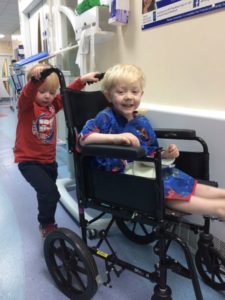
Harry 2               Harry and Sam

Since then, Harry has been unstoppable. He has summited Cadair Idris, Ben Nevis & Snowdon. He has won many medals at The British Transplant Games as part of the Birmingham Children’s Hospital and Charity team. Harry loves cycling, swimming, Minecraft and Lego.

But then he became poorly. This year has not been kind. Harry has spent around 18 weeks in hospital and now needs a 3rd transplant. Live donation is not an option. So the bags are packed and we await the call. We know that he will not get better without a new liver.

Although everyone is now a potential donor, the final decision is made by Next of Kin. Many say no.

More lives could be saved by people sharing their wishes. Sign up to the register and tell your loved ones. Thank you…”

Anniversaries and organ donations…

In the world of organ donation we never seem to be far from an anniversary.

This year the UK’s Organ Donor Register marks the 30th anniversary of its launch.  That really doesn’t seem very long for something we now take for granted, but it wasn’t always there.

Peter Cox was  24 years old when he died due to a brain tumour.

“He was a great rugby player, he didn’t smoke,” his mother, Rosemary, said in an interview for Channel 5 News (2018).   “He was the life and soul of the party, and suddenly he couldn’t remember things and we found out that he had a brain tumour, an astocytoma.  We heard it in January (1989) and he died in the November. We tried very hard but unfortunately there was no cure.  So he went, eventually, into intensive care at Warwick Hospital and while he was in there he told us that he wished to give his organs for transplant and so we set about carrying out his wishes.”

Christine, Peter’s sister, told the news team, “We explained to the medical team that he wished to give his organs and because he had a brain illness, everything else was perfect within his body.  So I think everything was used apart from his lungs, and up to 17 people benefitted from him giving everything it was possible to give.  It certainly made it a lot easier for my family to know that his death had not been in vain and that others benefitted from it.”

“Peter’s heart went to a grandfather in Newcastle-upon-Tyne,” Rosemary added, “and he was able to live for many years and enjoy his grandchildren so, we didn’t have our miracle, but he did.”

When Peter’s family discovered there wasn’t a national system to help fulfil Peter’s wish, Rosemary, Christine, and Peter’s dad, John, began a campaign to set up a UK-wide database for willing donors.

“Having lost Peter, it was the worst thing that could possibly happen to our family, we were very close, and we wanted to stop other people losing loved ones just because of the shortage of organs.”

Five years later, the National Organ Donor Register was launched.

My brother Peter achieved an unimaginable amount of good by expressing his support for organ donation, and making his decision known to us as a family,” says Christine.

From here, Happy Anniversary, National Organ Donor Register.  Thank you for 30 years, thousands of wishes honoured and more than 100,000 lives saved and transformed.  Thank you John, Rosemary and Christine. And thank you Peter, for your kindness that set it in motion…


A week to make a difference…

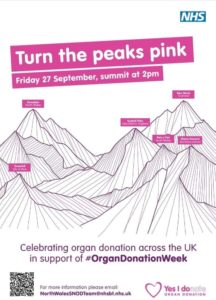
It’s Organ Donation Awareness Week 2024.

Lots of organisations have been preparing campaigns and activities to place organ donation matters in front of us over the next seven days – and, hopefully, beyond.  Charities and campaigns, many created by individuals and families directly affected by organ donation have gathered stories and photographs to post and share across social media. There will be more about some of them in this week’s Live Loudly Donate Proudly blogs.

Hearing about the theme for the week, a friend asked, “What can I do to support it? I’ve been on the donor list for years; what can I do this week?  How can I help?”
“That’s great. Thank you. Do your family know what you think?”
“Don’t think so, why?”
“Because if you’re ever in that rare and tragic situation where a medical team is starting conversations that might lead to some of your own organs being gifted to save the life of somebody else, it’s likely that they will be talking to your family. Even though we are all now presumed to be potential organ donors (with exceptions for age and certain other factors) should we ever be in that place our family’s consent will be vital. What they know about our decisions will matter. And if they are ever in that relative’s room at the side of an Intensive Care Unit, hearing the most awful news, it helps if it isn’t the first time they’ve heard of organ donation. It helps particularly if they know what you would say yourself. Then they may be better equipped to honour your decision and, perhaps, light a candle in someone else’s darkness.  So yes, please talk with them.”

“What else can we do this week?”

Pause when you’re scrolling through your various social media platforms when you see something about organ donation week.  Read it, then share, repost, whatever the platform allows that might spark a thought for someone else.

Write your own post.  A few words.  Do you know someone whose company you have been able to enjoy for more time due to their transplant?  There must be a sentence in there somewhere, maybe a photo, some experience, memory, that wouldn’t be there without that transplant…

Or come away from the keyboard, and the phone screen, and prompt a conversation aloud.  Talk about it to somebody.  Anybody!  “Did you know it’s organ donation awareness week this week?   Have you ever thought about organ donation?  Have you ever had a conversation with your family about it?  Or with your friends?”  You don’t need to be an expert to get it going, and you can always find out more if you look.

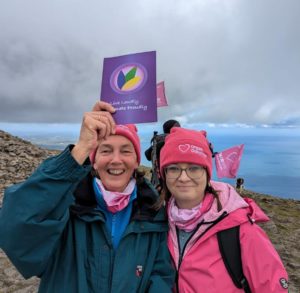
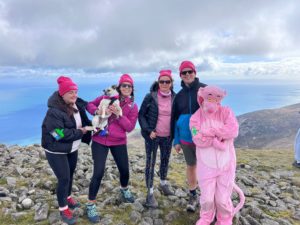
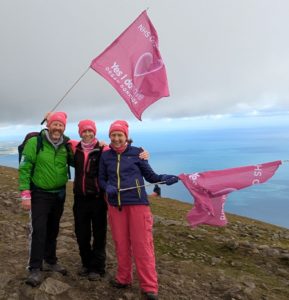
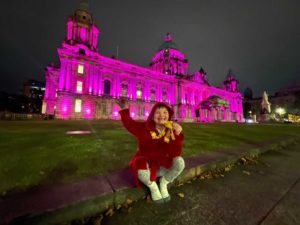
You don’t have to dye your hair pink for the week, or floodlight your house appropriately (hundreds of UK buildings and monuments will be lit in pink), or even choose pink when considering your wardrobe choice for the next few days, although many people will.  It could be anything, and probably more creative than many of the ideas above.  Whatever it is, if it opens the door on one conversation it could make an extraordinary difference, one day, somewhere.

Throw a thought in the pool and make a ripple for this year’s organ donation awareness week.  You won’t be on your own…and thank you…

Organ donation week at Giant's Causeway 2021

Games talk…

You need a good voice for the Transplant Games.  There is a lot of talking to be done.  Catching up. Sharing experiences.  For many of us it’s been a year since we last met.

For others it’s a first-time place and there’s some navigating to do through unfamiliar experiences and new conversations. When the whole world of transplants is still brand new for a family there’s already been more than enough to take on board. Now finding themselves surrounded by hundreds of people of all ages who have their own stories of health adventures and misadventures can seem almost as daunting.  It’s a dizzy height to reach, from which to look back on the path climbed to get there.

It can also be immensely reassuring. A place to relax from having to explain, asking for special understanding or particular allowances. A place to be, well, normal. One amongst others. Peers. Friends. Experts. Some as concerned, baffled, worried, fragile as themselves. Some as inspiring and encouraging and supportive as any human could ever be. (Sometimes they can be the same people…)  Many consciously choose to live not in the future but in the moment. All glowing with gratitude, for the extra time given, and for those who make it possible. Just watch, listen, as the representatives of donors and their families walk into the Opening Ceremony.

Then there’s the shouting and cheering for individual athletes, at the poolside, trackside, any venue where the twenty or so different events are managed. And the cheering for teams. Cheering for medal winners. Even more noise for others who may never stand on a medal podium but stand just as high in the estimation of all around them as they persist and complete their race, their event, despite all the odds that life has stacked against them and with all the gratitude and determination to do themselves and their donors proud.

After the closing socials, when the Games are done, the following morning can mean a quiet breakfast as voices are lost and all the energy given is in need of replenishment. There’s more to say, of course. Farewells for now.   “See you in Oxford, next year”.

“Hope all goes well next week with your procedure…”

Or with that second transplant; your exams; your holiday; your new job; whatever it may be…

“We’re around. Call, text, keep swimming. Keep dancing…”

It’s also about other conversations. The ones others have. The ones that may start, “I’ve been thinking. Did you hear about all those people in Nottingham a few weeks ago, a sort of Olympics for people who’ve had organ transplants? Did you know I ticked the box on my driving licence to say I’d be an organ donor if it ever became possible?”.

“I didn’t know that, but aren’t we all supposed to be donors now anyway, if we die in the right circumstances?”

“Yes we are, but we can’t be unless our families agree and support our decision. The hospitals won’t just remove an organ if my family don’t agree, even if it was my choice to be a donor.  So, I just want you to know that, should it ever be possible, that is what I’d want to happen. I’d like to give someone else the chance to start again if I can’t. Are you OK with that? Can we chat about it? Or can you promise you’ll support my decision? It might even help you to think of me afterwards, knowing we’d done that for someone else. Maybe even someone who could be at the Transplant Games sometime.”

At last year’s Games, Doroti Polger performed a poem she had written about Justin.  Justin had told his mum that he would like to be considered a potential donor, should the moment ever come.  Unexpectedly, it did, and his mum, Angela, honoured Justin’s decision.  Doroti’s brother, Kristof, is now excelling at the Games, and much more, because of Justin and Angela’s life-saving conversation.  NHS Organ Donation invited Doroti to write another poem this year.  We are privileged to offer Doroti’s link to her poem here 

Not defined by, but committed to…

“Once upon a time, there was a girl who really loved to swim. The end.”

So said a lovely card we received a few days ago on the fourth anniversary of Lucia’s death, 24th May.

A picture of a girl gracefully diving into high sea waves. A message of great kindness within.

True. Lucia loved swimming. The water gave her a place to feel free from daily struggles.  A place to focus.  To feel fit.
Another place to be grateful to her donors.  When it led to the podium there was always a beaming smile as she stood proudly with others and collected her medal.

But it’s not the whole truth. There is, of course, so much more to her life than swimming.

In February 2019 Lucia wrote a blog for her good friend, Lucy.  It helped launch the first campaign for Renegades Foundation, an online platform for some powerful young voices “making noise about silent stigmas”.

“My medical history does not define me”, Lucia wrote.
“The girl with the liver transplants. Anorexia. Anxiety. Diabetes. Auto-Immune Hepatitis. It would be fair to say that a good proportion of what makes me me – are medical conditions.

But that’s all it is. A proportion. It is not the whole of me. These words do not tell you WHO Lucia Mee is.

So, I will.”

And she did, in her own unique style.  You can read that blog here.

The twist/gift is that although her medical conditions didn’t define her, those conditions, and the medical responses to them, helped shape her life.

“I would say organ donation, my donor families, my donors, didn’t just save my life, they shaped my life because I now do all of these things that I would never have had a chance to do had I not been a transplant recipient.  In that sense, in so many ways, I would never, ever change what’s happened to me because, partly it’s the way I’ve grown up, but it’s given me such a unique and special life that, why would I want anything different, you know?  I go to the Transplant Games.  Transplant Games is the highlight of my year…I love it…and it’s given me all the passions that surround the Transplant Games, like my swimming…having interests, passions in life, and just…life in itself, to give you appreciation for the little things…  (Lucia, The Listening Project, British Library Archives.)

That’s the power of a transplant, the power that lies in those conversations, in consent for organ donation.  An opportunity not just to get back into life but to see it with new perspectives.  Deeper awareness that life is not to be taken for granted.  It is a gift.  Welcomed, appreciated and lived to the corners.

Lucia took her story and made it a resource to make a difference for others. In speaking of organ donation and its power to save and transform, she found the gentle power of a grateful voice, the flower that cracks through concrete, the word that can break a heart open.  And there were listeners…

But there was so much more.

“There is so much more to me, and to everyone. Your story is never just about one thing. So many things go into making us humans who we are. 

I am hard working. I am resilient. I am sarcastic. I am a writer, a swimmer, a reader, campaigner, feminist. I am a small-town Irish girl who wants to travel the world. I am still learning who I am, how to be independent whilst living with multiple medical conditions. I’m figuring out what my future might hold. I’m a sister, a daughter, cousin, best friend and ‘the single friend’. I’m stupid and crazy and a tiny bit reckless. I can take care of myself but probably no one else. I am not a cook. I am not the tidiest of girls. I’m creative and organised in a unique kind of way. 

I am a young woman who is figuring out what life looks like, and one part of that life happens to be my medical conditions. It contributes to my story in a big way, but it is not the whole book. 

I am so much more than my medical notes.”

Powered by the gift of strangers. The consent of organ donors and their families. It doesn’t just save lives, it transforms them.  A life that can become so much more, and so much more in the lives of others.

Four years on, we know our relationship with Lucia cannot be defined only by her death. It is more. We are more because of Lucia. And twelve and a half years extra with her because of her donors.

Like Lucia, we may not be defined by her medical records, or even by her absence.

Her donors transformed our lives, too. And Lucia’s commitment to making things better for others, is contagious.

Today, on her 25th birthday, we are with Lucia in reaffirming her commitment to Live Loudly, Donate Proudly…

Live Loudly Donate Proudly stones May 2024 crop


When silence can inspire a voice…


Caitlin McBride (3)

Sometimes struggle is on the outside, and plain for all to see.

But sometimes it’s hidden, silent, locked away.  Even then, sitting and doing what you need to do can be more than you imagine.  You never know what else you might be achieving…

Today is International Women’s Day and the theme this year is #InspireInclusion.

We are privileged to post this blog from Caitlin McBride, a courageous and honest story of personal struggle, of unspoken inspiration between two young women, and a deep commitment to inspire and support others.

Caitlin…

“This is the first piece of non-academic writing that I’ve undertaken in a while, and the first that will be publicly viewable. I’m unsure how to start, but I feel it is most fitting to begin this blog by approaching it as a conversation; in the spirit of Live Loudly Donate Proudly.

Hi, my name is Caitlin; I’m a counselling student, judo player, and of course – organ donor. I joined the organ donor register in early secondary school, as a result of Lucia’s passionate campaign and inspirational story. (Lucia, founder of Live loudly Donate Proudly.)  I went home that day, and when asked about what I had learned that school day, I told my family about Lucia and brought the conversation about organ donation to the kitchen table.

Lucia’s impact on me did not end there. During my time in sixth form, a particularly difficult period in my personal life, I watched her studying alone from just a few tables away in the library and was inspired by her drive and resilience. Unknown to either of us, we had a shared struggle at the time with disordered eating – and not only that, we also had a shared reason for continuing to study despite the ailments that troubled us both. We both aspired to pass on the care bestowed upon us by the healthcare professionals who provided pillars in our support systems.

It wasn’t until I overcame the social anxiety hindering me from contacting the Live Loudly Donate Proudly Facebook page that I found out about our similarities, because I never approached Lucia back in high school. I wanted to tell her family how much of an inspiration Lucia was to me back then, and how her character – so full of life and determination – continues to shape my discipline and motivate me through academic challenges on my journey to becoming a therapist in the mental health field.

That journey was not always smooth sailing; consisting of a few gap years, a few episodes of wondering if I was good enough to contribute to the field of mental healthcare and a lot of introspection as well as personal development.

Throughout this transition I have connected with so many wonderful people and challenged the most stubborn of limiting beliefs. I realised how the support of others can become a source of strength, and how uplifting connection as well as communities can be. In this endeavour to facilitate a safe space for people like Lucia, myself, and so many others who hold their struggles silently – I learned that many of us will unknowingly be a light in someone else’s sepia toned world. They may not always tell you; but you inspire people purely by being yourself.

Chatting to David (Lucia’s dad), learning of her sister Alice’s current role in schools across the pond supporting students and defending them from the demands of the education system that weighed so heavily on me as a teenager truly helped to solidify the realisation that there are so many people out there willing to offer those of us feeling lost, their shoulders to lean on. That there is constant care and connection between all human beings – and that strangers are simply people we have yet to learn from or build a relationship with.

I always regretted not approaching Lucia in the library back then, but only when I experienced huge loss myself did I realise how heart-warming it can be to hear stories about those loved ones who are no longer with us and what they mean to others. Only then did I realise how precious time is, and how important it is to say the kind things that you think of others aloud to them. I didn’t want to regret not approaching her family either, so I started the conversation. As it turns out, and as David so wonderfully worded in his response, “No gift of kindness is ever wasted.”

Our conversation led to me sitting here, writing this blog by the beach and thinking about Lucia, her legacy and her family’s continuation of that. Thinking about kindness; thinking about my lost loved ones; and the invisible string that connects us all – regardless of if we interact. I find it wonderful how our natural way of being can be a source of inspiration and how such amazing things can come from approaching a conversation – especially when it’s not exactly easy or includes a topic that we often ignore; whether that be organ donation, ill mental health or anything else.

I feel extremely privileged to have been offered the space to write here on Live Loudly Donate Proudly and hope that I have done its ethos justice. I am so sincerely grateful for the conversation that followed a successful fight with my social anxiety and I’m so very thankful that you’ve read along and joined the conversation.”

Caitlin McBride

Big Yellow Friday…

Yesterday, 1st March, was Big Yellow Friday.  A day when the Children’s Liver Disease Foundation (CLDF) ramp up their programme of fundraising and awareness raising. Supporters wearing yellow in various guises, baking yellow cakes for sale, sponsored dish washing in those fashionable yellow rubber gloves.  It even coincided with St. David’s Day this year adding something else to the waving of yellow daffodils.

Daffodil Big Yellow Friday 1.3.24

Yellow?  Simple.  Jaundice is when your skin or the whites of your eyes begin to show tinges of yellow.  It can be one of the early and developing symptoms that all is not well with a liver.

It was that sign of yellow in the whites of her eyes that took Lucia, the founder of Live Loudly Donate Proudly, to her local GP.  He triggered a process of attention that led to an emergency liver transplant after acute liver failure.  The yellowing of her eyes gave enough warning for Lucia to be in the heart of the hospital system before the crisis took hold.  Well worth watching for the warnings of yellow…

After her second transplant, just over a year later, Big Yellow Friday was Lucia’s first fundraising venture, along with the enthusiastic support of her sister and their friends.  It also helped her find her voice as she gave her first public, illustrated presentation on organ donation, aged 10.  In years to come Lucia was a regular supporter, participant and speaker in CLDF events and conferences.

CLDF is a firm favourite of ours in Live Loudly Donate Proudly.  It’s a fantastic organisation with a wealth of experience and resources to help children, young people, and their families weave their own ways through a world of new languages, big issues and complicated experiences.  Packed with resources, from leaflets about baby jaundice and even a colour chart of a baby’s stools, to inspirational information packs for young people on how to manage an inclusive range of growing-up experiences alongside liver disease and transplants.  More information packs for parents, for schools, and even for GPs.  Blogs and newsletters for health professionals, and grant support for vital paediatric liver research.

CLDF offers direct, personal and group support for children and young people, through events, residentials, and programmes.  ‘Talk, Tell, Transform’ was an excellent residential programme bringing young people together to share their experiences, learn from and support each other, and then through learning film-making skills, turn their stories into honest, moving, funny resources for others.  (Youtube playlist of CLDF Talk Tell Transform )  That programme is temporarily parked, but Hive, a “Facebook-based social network created by young people exclusively for young people with a liver condition or transplant” continues to cater for 13-15 year-olds and Hive+ for 16 – 24 year olds.

In a few weeks time, CLDF is to merge with the British Liver Trust, becoming one larger organisation in the belief and hope that they will be better together, better for each other, stronger and more effective and resourceful for others.

So, on Big Yellow Friday, we raised a yellow bun and a daffodil for this excellent organisation that offers solid and creative support for those who, out of the blue, find the hint of yellow that plunges them into new and demanding worlds.

Well worth a day of extra attention – and its always a good day for any support you are willing to give… Thank you, CLDF…

Lucia speaking at Children's Liver Disease Foundation Conference

Twelfth day of Christmas – come along to the celebration…

Twelve days of blogs. On this last day of Christmas, an invitation to a celebration.  A huge jump into what for many in the organ transplant world is the highlight of the year, the Westfield Health British Transplant Games.  This year they will be held in Nottingham, 1st – 4th August.

If you’re a donor, or you’ve received a transplant, there’s a place for you to participate as a competitor.  You don’t have to be a practised athlete, just someone who wants to have a go and give it your best.  Any age.  Teams are registered through the hospital that carried out your transplant so ask for your hospital’s Team Manager and sign up to come along.

You could also participate as a volunteer, or a sponsor or fundraiser.  (More info.)

Or you could just come along anyway.  Come and watch, come and support, come and cheer people on.  Sign up for the 5k or 3k Donor Run (or Walk!), a colourful and fun adventure for the serious and not so serious, all proud to raise awareness of the incredible world of organ donation and life-transforming transplants.  Watch the social media for the Games and pass the word along.  Just come and be grateful that it’s all there, miraculously, for all of us if and when we need it.

Or come to say thank you, one more time, for the donors and their families.   You’d be joining in with the loudest and longest thank you of the Games…

You may have given your consent to be considered an organ donor yourself. Donating blood, plasma, or bone marrow are also options as life-transforming gifts.  And letting your family, your loved ones, know what your wishes are about organ donation is as important as ever.  Without their consent it couldn’t happen.

If you’ve already done all that with your family, and you don’t need to make it any plainer, don’t stop there. Start a conversation somewhere else. Have fun with it. Wear a badge. Hang an organ donation air freshener in your car and give someone a lift. Use a lanyard at work that invites the conversation. Carry a rolled up copy of the Organ Donation Times (there isn’t one – you could start it?). Have your head, arms, or whatever tattooed with something that will start the conversation – some people have, seriously. As one friend of ours says in the name of her new Instagram account for organ donation awareness, “Skip the small talk”.

However you do it, wherever you are in any of the blogs these twelve days of Christmas, somebody, somewhere, could already be saying thank you for you.  From the deepest place in their hearts and minds. Even if they don’t know you. You may be, or become, a donor. Or you may be the “single word that can make a heart open”, the ripple that becomes the crashing wave of someone else’s gratitude.  Live Loudly Donate Proudly…

Eleventh day of Christmas – schooling with a difference…

School’s back, or soon will be for everyone else. Terms will also start in many hospitals, too, so children who are inpatients don’t have to miss out.

There are lots of ways of helping children keep up with school progress and interests in learning while they are in hospital, or off school for long periods due to their illness.   Some of the Children’s Hospitals could have as many school staff as some average size schools.  The staff may teach in small classrooms, in corners of a ward, or one-to-one at the bedside.  Most children will be short-stay patients so teachers will have to build relationships very quickly and work with flexible lesson plans, as well as often manage some intense emotions.

For the children it is a way to recover some normality, something familiar, creative distractions from serious illness and the traumas of being in hospital.  But it’s not just ‘back to school’, it needs to be tailor-made to suit the students and their circumstances.  The vision of the James Brindley Academy, providing schooling through Birmingham Children’s Hospital, is “…to ‘Think Differently’ to inspire young people to overcome all barriers and achieve their dreams.” (A good model for education everywhere?)

For those children, and sometimes their siblings, in hospital for lengthy stays or frequent visits, the school team is a valuable part of the picture.  Good support for parents too, seeing their children cared for and enjoying opportunities to develop their skills and learning.  Time to slip off for a coffee, or a phone call, with gratitude to yet more people in the team.

Meanwhile, in the home community, there are teachers who help the class show their care for their absent friend, holding their space in the place they know best.   Cards made in class time, letters written from school friends and sent to the hospital, are treasures that reassure a distant patient that they are not forgotten and haven’t lost their place.  A ‘welcome home banner’ painted by the class.  Time given helping classmates understand the reality of the illness and the space given to the young person on their return to school.  A chance for them to tell their story, if they choose, and to be accepted and understood if not.  A novel about children and organ transplants read together in class with sensitivity and understanding.

For some it can take other pathways.  Time out of school can bring disruption to friendships and circles.  Misunderstanding of medical conditions and fears that grow in the absence of accurate information can leave someone vulnerable to isolation or bullying.   The schools that manage that well will not be forgotten (nor, sadly, will those that don’t).

How do teachers, learning support assistants, others in the school teams, deepen their own understanding of organ donation, or other long-term conditions, to make it better for everyone?  How can they sharpen their focus on the children in their charge who are in most need of support?  Paradoxically, they may be the very resources that could strengthen abilities in us all for empathy, compassion and care.

(Live Loudly Donate Proudly has helped ensure organ donation awareness materials are available for all primary schools in N Ireland, with secondary schools to have the same this year – for more see our previous blog).

Schools, like the rest of us, work best when we pay caring attention to those who need it most.  It’s repaid many times over.  Grateful for our own experience, and that of many other friends, thank you – thank you to those who make it all work through their teaching in hospitals, at home, or in our schools, teaching much more than a curriculum.  Five Gold Stars on the chart…

Tenth day of Christmas – working to let the best happen…

Maybe you are one of those good souls who was working over Christmas or New Year, keeping the engines running and the wheels turning, the ward looked after and the shop open.  If so, thank you, and enjoy your well-deserved break when it comes…

For others it was back to work on Tuesday, or today, after some time to be somewhere else and do something different.  There are more than enough wistful jokes on social media this week about finding ways to avoid going back and prolonging the holiday instead.

There are some who won’t be going back this week because of being in hospital, either as patients themselves or accompanying those they love who are ill.  They will need another set of supporters.  Colleagues and bosses who can understand enough to say, “Go. Do what you need to do. Be where you need to be.  We’ll work out all the rest between us.”

It isn’t everybody’s experience. Not for those whose hearts are breaking and must still turn up for daily work. How do you concentrate then? How do you pretend you want to be at work when everything tells you and those around you that you want to be by the side of your son, your daughter, your loved one, in their own personal, painful, frightening journey?  Sometimes it’s called compassionate leave, compassionate for a reason.  But can it still be called compassion if it starts to drain funds and doesn’t last long enough?

For those employers and work teams and colleagues who give the gift of time, and secure protection, who find ways to care and to support from within the workplace, who take up the slack for a missing colleague, keeping things going in their absence, finding ways to make it happen and getting creative with the support, going an extra mile, or two – this is also a gift beyond words. Time given to an employee is precious time given to a child, a close relative, a dear friend, a contribution that allows the best of love to continue…

Thank you to those who help us to be where we need to be. Thank you to those who work at it and guard it when it’s needed.  It can never be repaid, though it will not be forgotten, and who knows who may need it next?