Music on a transplant anniversary…

Sixth day of Christmas.  This morning five years ago, the transplant coordinator gave us news that a liver was available for transplant, tests being done to determine its suitability for Lucia.  Our wait that day in ITU was filled, not with music, but gentle conversation, unspoken thoughts.  A nurse helped as Lucia’s mum, and sister, washed, dried, and plaited Lucia’s long hair.  Eight hours later it was confirmed.  As the light had faded for another family, their courage and kindness became a gift of light for us.

There was always music for Lucia, even in hospitals where much was enjoyed by her nurses, sparking conversations and exchanging songs.  A “Sleepy” playlist helped to distract, and nights to pass.  Stay Awake, by Julie Andrews, Piece by piece, by Katia Melua, and Sweet Silver Lining, by Kate Voegele, and her acoustic version of It’s only life.  There was music post-transplant, too, Lucia working hard with her physio team to her own chosen song, This girl is on fire, by Alicia Keys.

After her transplants, Lucia worked as hard as she could to get back to the dance floor.  Any dance floor – our front room, a disco, the local night club, parties, gala dinners and, above all, the Transplant Games.  She lived with a soundtrack in her head, making playlists with lyrics that were almost “notes to self” – and playlists for others, for parties, birthdays, the gym.  “Dancing is, like, my thing.  Even before I had any kind of (illness)…I think I was always a very bubbly, bubbly person but it’s made it, multiplied it, like a million times over!  If I hear a song I like, I just…I will not sit down…  And then you try and get other people up, and it kind of becomes infectious…”  It did.  Galway Girl, either song, by Steve Earle and Sharon Shannon, or Ed SheeranBelle of Belfast (Tell me Ma), by Sham Rock.  Run the world (Girls), Beyonce, and so much more.


Slowly recovering in hospital after her second transplant, for a while Lucia was particularly withdrawn and silent.  We asked what music she might like to hear.  She dug deep and suggested a track we had to hunt for.  When we eventually found the CD Lucia was after, there were smiles in the room again as she started to listen, and move, to Amenitendeya, by the Mwamba Rock Choir.  This Ugandan Children’s Choir had performed in her school and Lucia revisited the exuberance of the young African girl who had embodied joy and gratitude in her widest of smiles and boundless energy. “My hands nearly dropped off I clapped so much.  Nobody wanted them to stop,” Lucia said.  “Mrs McBride let us put the CD on in the class while we worked.  We all sang along with it.  She knew it would help us do our work.  It made us happy.”

One morning, a letter arrived for Lucia.  She’d been chosen for the GB/NI Transplant team to compete in the World Transplant Games, in Sweden, 2011.  Her delight flowed as she sat on her own at our piano and played and played, no music in front of her, improvising out of sheer joy.  Untrained though she was, the sound caught our attention that evening, and we caught half an hour of it on tape.  Years later, her friend and former music teacher “tidied it up a little” for ears more delicate than her family’s as we prepared a celebration of Lucia’s life.  A beautiful expression of Lucia’s joy at belonging to the team, and the “transplant family”.  We can’t include it in this blog, so you’ll just have to imagine.

On that same tape was an earlier recording of a younger Lucia, singing at the top of her voice – in the bath.  Lines from two songs, over and over, with great, uninhibited enjoyment.   The first is I will always love you, by Dolly Parton. Then a momentary pause in Lucia’s singing and, in her best attempt at a Dublin accent (don’t ask), “I will always love you.  I will.  Always.  Always.”  Then her singing started again, with renewed energy and abandon: The Beatles, Ob-La-Di, Ob-La-Da, life goes on...


Lucia at Christmas - Just dance (2)

From dramas to drama…

Fifth day of Christmas, and a guest blog from a good friend with a story to tell, and a song for our playlist…

“Hi, my name is Connie Taylor.  I was kindly asked by Live Loudly Donate Proudly if I wanted to write a bit about myself as what I like to call a Transplant-ee, and of course my immediate response was yes.  I don’t see myself as a seventeen-year-old university professor about to impart wisdom worth 22 Carat Gold, but I do hope I can shed some insight into the life of someone who (like the incredibly and admirably brave Lucia Quinney Mee) has gone through the strange and wonderful experience of a transplant, in the hope of inspiring others to learn more about it for themselves.

I was born in 2007 with a condition called Megacystis-microcolon-intestinal-hypoperistalsis syndrome (also known as Berdon syndrome – much easier to say!).  It is a condition that meant when I was born, my digestive and urinary organs had no muscle function.  Because my digestive system (stomach and intestines) didn’t work it meant that the only way I could be fed was intra-venously.  The downside of this was that my liver didn’t like it, and I ended up with severe liver disease.  So not only did I need a new stomach and intestines (small and large bowel), after a few months I desperately needed a liver too.  After 13 months of waiting and wishing, my parents finally got the call to say they found a match suitable for me to have my liver, stomach, pancreas, and bowel transplanted.  Unfortunately, it is currently not possible to have a bladder transplant so the need for catheterisation will always be a constant for me.

Thanks to the bravery of a young mother, whose son had sadly passed away in an accident, this young boy saved the lives of me and at least two other people and is someone I am eternally grateful for.  The choice to donate his organs gave me an opportunity that cannot match any other gift, the gift of life, and a second chance that must never go unrecognised.

This 12-hour transplant surgery, which included the removal of my spleen to ‘make room’, and removal of my appendix in case it should ever give me problems, was the first of many and varied surgeries. Unfortunately, being so small at the time of my transplants, there wasn’t enough space in my abdomen to fit the donor large bowel in, so this meant living with just a small bowel and an ileostomy (stoma) bag.

From transplant until now I’ve had many other issues; my new small bowel had ‘plumbing problems’ in 2014 (many tubes were tied, so to speak), I had a little bit of my own large bowel left in during the transplant, but this caused me no end of problems and was, literally, being a pain in my backside to put it very lightly! I eventually said sayonara to this bit of my own bowel in 2021 – my decision.  This was a major operation and meant I ended up with Sepsis, but it was worth it in the long run as that diseased bowel was not doing me any favours!  I said cheerio to a gastrostomy device in 2023 which used to give me nutritional feeds and liquid medication.  I also said hello to the use of a self-catheterisation device in 2022 which meant I no longer had to pee from a leaky suprapubic catheter tube, and I said ‘good to have you’ in the same year when I finally made peace with the inevitable reality of having a permanent ileostomy/stoma bag.  All things considered, you could say I had more of a spring in my step this past year, and all for very good reason.

Of course, growing up with this condition presented itself with many challenges such as the trips to the operating theatre which became a very difficult task for a long time, making me accidentally develop PTSD for a while (oopsies).  Yet, through the help of the wonderful child psychologist Dr Susie Willis, from Royal Belfast Hospital for Sick Children, I overcame my fear of anaesthetics and became more of a ‘cool cucumber’ when it comes to surgery.

On top of this, we cannot ignore the absolute rollercoaster that is school and navigating it, alongside a condition named longer than the alphabet, while everyone else’s worries seemed to only stretch to who said what at break time in the PE toilets!  If I’m honest, I never fully understood my medical condition for the majority of my childhood primary school years and I was a very reserved and shy person when it came to anything medical, so for about 16 years until sixth form in secondary school, I never mentioned it to anyone aside from my close family. But recently, my hospital experiences have somewhat faded out into the background, and I find myself being more open to other people.  That’s not to say I can’t still improve, but who doesn’t when it comes to confidence?

In hindsight, my life experience so far is something I am truly grateful for in a bittersweet way.  It has helped me become a very grateful person and approach things rationally with a positive outlook, despite my teenage cynicism at times.  This unique perspective of life has taught me many lessons and is probably worth more credit than I give myself now that I’m actually sitting and reflecting/typing about it!

So, as I write this during a free study period in my last year of A-levels (English Literature, Moving Image Arts, Performing Arts) with a self-catheterisation tube in my blazer pocket and a spare stoma bag in my schoolbag, I’m pretty excited for a future where hospital is something to very rarely think about. I do hope to pursue a career in the film industry and want to spread awareness around organ donation on a bigger scale, inspiring others to learn how they can one day save a life too.

Also, my song suggestion would be Pencil Full of Lead by Paolo Nutini –  a song which reminds me that even if there may be a multitude of problems going on around me, I still have all I need to get me through it.”

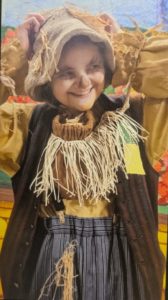
Connie Taylor Scarecrow Ballyclare Grammar Christmas 2024Connie – star performance as the Scarecrow
(School production of Wizard of Oz, Christmas 2024)

Intensive music therapy…

Fourth day of Christmas and four more songs for the Live Loudly Donate Proudly 12 days of Christmas Organ Donation Playlist.  And we hope you can find a snappier title for your playlist than that…

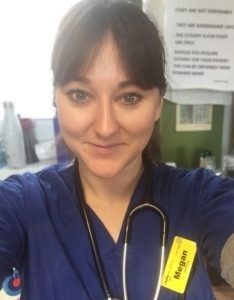
Today’s contribution is from Megan, who, when we first met her, was one of those incredibly attentive, skilful and caring nurses working in a Liver Intensive Therapy Unit (LITU).  (She is still all of those things, of course, just not working in the same place.)

Intensive care is just that – care that is intensive, in detail, attention, sensitivity, intuition, professional skill and practical love.  Not surprising that the intensity should be reflected in the range of emotions in Megan’s gift of these songs.  We add them to our playlist with resounding gratitude for all those ready to care for us in these exceptional places.

“Nick Cave – Into My Arms. This is an emotive song for lots of reasons, and one I strongly associate with LITU.

Kamasi Washington – The Rhythm Changes.  A song which always makes me feel good, and I regularly used to put on after a shift to get me back to myself.

Captain Beefheart – I’m glad.  Another song I find emotive, but sometimes we all need a good cry and this can get me going.

Bettye Swann – (My Heart is) Closed for the Season.  I had this on before I went to one of my last Christmas parties with LITU before dancing all night long with some brilliant colleagues. Reminds me of a brilliant night.”   

Megan-Morgan-Kings-College-Hospital-Copy 2-234x300


The gift behind the music…

The third day of Christmas and three more songs to savour, and to add to the transplant playlist.  They are the gift from Lucy and Ben, the mum and dad of Charlie, a young boy who needed a transplant when he was only a few months old.  He’s a young teenager now, and packed full of music and dance himself.

As well as the music, their words are also a gift, an honest and vulnerable insight into some of the most intimate moments of a family on a transplant journey.  Listen to the music, add them to the playlist.  Sit with them for a while and remember that behind the music, someone said yes to organ donation.

“Music is just the best thing to make someone happy, or to make somebody sad, and I think that’s amazing. Music really is quite poignant in our journey… There’s two songs specifically, for me.  There’s one that I used to sing him when he was in his cot, waiting for him to wake up, needing feeding, or nappy changing, while we were in hospital.  I’d sing it to him then and I still can’t listen to it 14 years later, which is Make you feel my love, by Adele. I sang it just like Adele, obviously…  

There’s one particular verse…just looked it up and it makes me a bit emotional.

I know you haven’t made your mind up yet. 
But I would never do you wrong.
I’ve known it from the moment that we met.
No doubt in my mind where you belong.

Then, a lovely one was when we were in Intensive Care, post-transplant, and I asked for music because I listened to a lot of music while I was pregnant and he used to wiggle around and he loved music and still does now, so I asked one of the nurses to put the radio on in our little room, and the first song that came on was I can see clearly now, the rain has gone, (Johnny Nash) and I just remembered standing over his cot…and, yes…it’s a really good song.   That was a really happy song and I have it printed up in a picture on my wall. It’s a happy song.

Ben’s song is Three little birds, (Bob Marley) because he likes the message that it gives.  It’s a little bit more chirpier than mine, and obviously we’ve got very much of a reggae theme in our house, unknowingly, but he likes that song because, well obviously, we’re like three little birds…

Music is such a powerful gift, and I believe that those songs were gifted to us in those moments to send us a message of hope. Who knows if that’s the case, or if it was just coincidence, but either way, they are mighty powerful and will remain in my heart always…”

three little birds (3)

2nd day of Christmas: some company along the way…

Day 2 of the Christmas blogs, and the first contribution from our guests is from Faye, a nurse and former transplant coordinator.  These are the incredible people who join lots of dots, making it possible for organ donation to happen and be the miracle that it can be.  They communicate with transplant centres and medical teams, coordinating the opportunities for organ donations throughout the UK, making sure organs get to the right place quickly and in optimum condition.  They talk with patients and their families. They are the ones who keep in touch with families during the transplant operations, bringing news and updates from the operating theatre.

Faye Baxter

“When thinking about patient journeys, wherever the end destination may be, this beautiful version of You’ll never walk alone, by Nina Simone, comes to mind.  As a nurse caring for patients on a transplant journey I certainly wouldn’t have wanted any patient or their family to walk alone; I would want them to know we are always there for support.  I think this song also recognises that sometimes that transplant journey can be a very challenging one.

This is a beautiful instrumental version of the song.  Perhaps not surprisingly, this song was suggested by a few people, so more of it to come…


Blogs, stories, music, and conversations at Christmas…

Welcome back to Christmas, and a blog a day for these 12 days.  (No partridges involved.)

There will be a few guest blogs from good friends of Live Loudly Donate Proudly and, sprinkled around them, a liberal helping of tunes.

The season is littered with Christmas playlists and favourite films to binge on (or avoid!), so we thought we’d extend the idea a bit.  In our commitment to encouraging those conversations about organ donation, we’ve invited a bunch of friends from the transplant world to contribute a song or piece of music that has become part of their own journey’s soundtrack.  We were surprised (shouldn’t have been) by the responses that came so readily, and that provide a window onto some deeply personal and intimate experiences.

Many tracks are familiar, although to link them with these personal journeys may be to hear them in a completely  new way.  Our tastes vary, but in all this music there is an invitation to visit a different place, even for a few minutes, and “sit with” those who give us their music, and sense a little more of the hopes and fears, joys and dreams that come with it.

We also wondered how best to share these tracks.  Never easy for the non-IT skilled…and since people use all sorts of different music platforms we gave up scratching our heads and suggest you take the titles suggested, find them on your own chosen platform, and start building a Live Loudly Donate Proudly 12 days of Christmas playlist…

To start us off, here are a couple of tracks that helped bring organ donation to mind in a public way in recent years.  The first video released with Lewis Capaldi’s song, “Someone you loved”, featured his relative, Peter Capaldi, as a man who visits the family of a woman to whom his wife’s heart was donated.  It was released in partnership with the organ donation campaign group, Live Life, Give Life.  The second version of the video focused on friendships and family, and, as Capaldi said,  “…the people we surround ourselves with that have the strength when we don’t and help us continue to make the right decisions in moments of fear or hardship.”

Then, in a different genre, a song from Bonnie Raitt, “Just Like That”, inspired by a similar news story she saw about a woman who donated her son’s organs after he died, and who then met the man who received her son’s heart.

And, if you are still hungry for Christmas films, and don’t mind a spoiler…there is a story wrapped around the Wham track, “Last Christmas”, in a film of the same name.  Critics criticised it, audiences loved it.  You choose.

Whatever you do with these blogs, may there be kindness for you in the best of this season…

A tale of two children, held in enduring love…

The last day of Organ Donation Week 2024.

We hope you’ve found something that caught attention in this week’s variety of campaigning and publicity.  If these blogs have been part of it for you then…thank you.

We know blogs like these are only a foot in the door, starters for the much bigger meal that could be made of organ donation and its breadth of related stories.  If you are willing to walk in through the door a little further, then here’s a way…  It’s a book and, for a few more weeks only, an abridged version read by its author is available on BBC iPlayer.  It was the Book of the Week earlier this month.

The Story of a Heart

The Story of a Heart, by Dr Rachel Clarke, was published on 3rd September 2024.  The writer opens her prologue simply, “This is the tale of a boy, a girl, and the heart they share.”  ‘Simply’ could hardly be a more inappropriate word for what follows, and her second sentance foreshadows all, “It is a story that no one was meant to tell.”  Not secret, but not what we want our lives to include.

The book, using four years of sensitive interviews and research, and the writer’s own extensive bank of experience as a palliative care doctor, health service campaigner and accomplished writer, opens a window onto the vast world of organ donation and transplantation through the stories of Keira Ball and Max Johnson. With detailed back stories of medical research, technology and systems development that make transplants possible, the writer never strays far from those profoundly human stories she announces in her first sentence.

This is not, nor did it intend to be, a definitive book on organ donation, nor even on one story. There is always more that could be said, or will remain unsaid, intimate, even some (probably very little) already forgotten, overtaken by immediate demands. But in the breadth and depth of its content and the compassionate insight and vulnerable, honest humanity of those Rachel has spoken with as she threaded the pearls of this story together, it is as revealing and inspiring a doorway to the subject as could fit between the covers of an accessibly sized book, and grace anyone’s reading list.

This is not a book review.  This reader hasn’t yet reached the last page. Good books are in dialogue with their readers, some will pull them quickly to the last page, racing to find out what happens. This time, we already know the conclusions. It’s the details of the journey that captivate and enthrall. The skill of the writer’s craft may give reason to pause and look twice at the scenery or, as in this reader’s case, it may trigger images, revisiting other experiences, giving reason to do more than pause, and catch breath.

For some, it will provide a skilful invitation to imagine a situation they’ve never been in, and hope never to experience, a journey of empathy resourced with accuracy and compassion.

Others may be plunged back into their own experiences of hospital corridors, and small, busy rooms of machines and bleeps, their whole being aching to do more than seems humanly possible for the one they love, now in a hospital gown, sedated, attached by wires and tubes to the mechanics of life-giving care.

These pages could take both type of reader into hard places.  A word used, overused, even dreaded, is still one of the first words we reach for to describe the journey – rollercoaster.  But a rollercoaster as far removed from the fairground fun as it could be.  No one needs this kind of adrenilin rush.

Never flinching from detail, there is some respite when Rachel turns her forensic lens onto the  background of research, innovation and courageous practice driven usually, not by detached, scientific curiosity but by deep desire to address immediate human need, often arising from direct exposure to personal catastrophe.

This respite scarcely allows time to draw breath before it will, in turn, return us to one of the two Pediatric Intensive Care Units and the extraordinarily focused details of the skill and resources, of love, applied to these two precious children and their families, linked by the story of a single heart.

Organ Donation Week closes tonight.  We know its importance continues, on one side for the thousands on the waiting list and, on the other, for those who will be plunged into sudden trauma, and a choice to consent, or not, to donation.

If you do find opportunity to listen to, or read, The Story of a Heart,  you will have still more reason to have those conversations about organ donation…

Thank you for reading this far.  Now, back to the next pages of Rachel’s book…

The Story of a heart cover (2)

Turn the peaks pink…

Organ Donation Week is almost over – one day to go.  It’s been a busy week for many.  The logistics of the week’s awareness raising was complex, much done in the months and weeks beforehand, much of it hidden from public view.  Sorting the funds necessary for some of it.  And the permissions, the lighting, the theatre gels and coloured bulbs that had to be in place to light up public buildings and monuments and natural features across the country in the pink of the organ donor card.

Arranging the press coverage to get the maximum reach for the stories. Lining up the interviews for the media, local and national.  Inviting and encouraging individuals and groups to consider participation in the events, to sign up in advance, get to the football pitch for the drone picture on a set day and time, wear something pink, bring a photo, a banner.

Gathering all the personal stories to be posted on social media by the growing number of organ donation charities and campaigning groups, by medical teams working daily with donors, recipients and their relatives, and by families and individuals whose lives have been shaped by organ donation.  Some telling us why they decided to give their consent for organ donation when a loved one died, and the grace it is for them in the grief they carry. Others who received that gift, and the thousands of everyday differences it has made, being able to start their lives again.  Each one motivated by gratitude and kindness, wanting to make a difference for someone else.

Yesterday, in a range of weathers (depending on time of day as much as location), hundreds of people took to the hills, ascending six of our highest peaks; Ben Nevis in Scotland, Scafell in England,  Slieve Donard in Northern Ireland, Snaefell on the Isle of Man, Yr Wyddfa/Snowdon in North Wales and Pen y Fan in South Wales.

Turn the Peaks Pink

Most walked, some managed to get a train! The Snowdon railway played it’s part in getting some of those pink wooly-hatted participants to the top where they were tunefully entertained by a Welsh Choir.

We are proud to say Live Loudly Donate Proudly made it to the top of Slieve Donard, and in great company.Rachel and Rachel, and the mountains of Mourne sweeping down to the sea... ODW 2024 crop

Rachel Quinney Mee and Rachel Chambers (Photo: Stephen Glover – thanks!)

After a decent night’s sleep, Rachel talked about the day on Slieve Donard.

“The first person to arrive at the site – 7.30am! – was Catherine McKeown, the Organ Donation promotions manager for the NI Public Health Agency. Catherine was on the go all day, organising, managing publicity and making sure we all had our pink beanies and snoods, and a few flags and banners. 

It was great to be with such a mixed group of people – ICU nurses, donor families, transplant recipients, students, and enthusiastic supporters – even the Pink Panther! – keeping each other going on the climb up the mountain.  It was a steep climb, but it felt a lot easier as we were in such good company and distracted by each others stories. 

 On the way back down, we knew that everyone was going back to our different places to keep the conversations going about organ donations.  We have all been involved with it from different angles, so it’s personal, and we know how important it is, as Lucia said, to Live Loudly and Donate Proudly.”

Slieve Donard and the Pink Panther ODW 2024           Slieve Donard, Stephen Glover and friends crop 2

There is also a great collection of photos from all the climbs on the Donor Family Network’s Facebook page.

So, is that the peak for this week’s campaign?  The summit?

Spectacular though it has all been, the real peak benefit of this week won’t be on camera.  It will be far from the creativity, energy and enjoyment of public campaigning, in a small family room of an intensive care unit, in a conversation with shell-shocked relatives as they hear the irreversible news that someone they love will not be going home with them again.  In the sensitive minutes that follow, they may learn that the one they now grieve is able to be an organ donor.  Do they know what their loved one would want to happen?  Are they able to honour that decision, whatever it may be?

Somewhere else, someone is waiting for a phone call, and the chance to live.  Perhaps, next year, they will be able to participate with their friends in organ donation week.  Climb a mountain with gifted lungs, a gifted heart, a gifted life…  That’s an achievement to celebrate, and it should be on camera.

Lucia nr Fairhead after 3rd transplant crop

Have you had a conversation about organ donation?  Could you have another?  Please…


Organ donation in the pink…

There’s a fun, interactive map online this week.  It’s called Lighting Up Pink 2024, and it shows the locations of buildings, monuments and landmarks all across the UK that are being bathed in pink light to draw attention to this week’s campaign for organ donation.  Is there one near you?  Check the map on the website – Organ Donation Week 2024

Why pink?  Simple.  Pink is the colour of the organ donation card.

The more pink there is around, the easier it is to see the support for organ donation around the country. It’s a colourful invitation, a reminder, encouraging people to consider registering their decision about being a donor.

There seem to be about 170 places on the list so far, including theatres, bridges, hospitals, museums, Council offices, Town and City Halls, monuments, natural features, and more.  Last year, even the Kelpies, outside Falkirk, Scotland, 300 tonne, 100-foot tall steel sculptures of horses heads, the largest equine sculptures in the world, were bathed in pink light as part of the week’s campaign.  (Are the Kelpies in the pink again this year?)

Kelpies 2023

Check the map, or your local media, and go sightseeing (in weather appropriate clothing!).  If you do find a ‘pinked-up location’ near you, you are invited to take a selfie with it and share it on your social media platform, using the tag ‘@nhsorgandonor’.

It might be a bit late to encourage those in charge of civic buildings and monuments near you to add pink lights this year – but why not look around and see who could be persuaded to join in for Organ Donation Week 2025?  Is there an iconic site near you that could carry a message that might save lives?  The Organ Donation Week website even carries a template invitation letter you can modify to suit your location and send to those who can make it happen.  Of course, if you’ve already got outside lights at your house you don’t even have to send a letter…

The most important thing you can do is to register your decision about being a donor, or not, and that can take just a couple of minutes – here’s a LINK . Whatever your decision, please remember to talk to your loved ones.  It could be a great help to them if they ever have to answer for you.

Meanwhile, do what you can to stay in the pink…

Pink in Belfast

Daithi Mac Gabhann, almost 8 years of age, was awarded the Freedom of the City of Belfast in June 2023, in honour of his family’s campaigning on organ donation.  Daithi has been on the Transplant Waiting List since 2018, waiting for a new heart. Belfast City Hall will be dressed in pink again this week… 


Racing for organ donation…

This week, there’s a big race going on.  All over the UK.

People in 12 regions across Scotland, Wales, Northern Ireland and England are signing up on line, as individuals or joining teams, to log up some miles (or kilometres – they’re shorter) over Organ Donation Week.  A bit more than the week, actually, to include two weekends.  It started on Saturday 21st September and all kilometres completed must be logged online by midnight on Sunday 29th September.

The Race for Recipients.  The big idea for the week is to lift the profile of organ donation a little (or a lot) by doing some physical activity.  Then we win twice, because we know physical activity is a Good Thing To Do.

We are invited to run if we choose, or walk, swim, cycle, row, climb or…whatever form of physically activity we prefer, beyond our normal day to day activity.  Steps between the classrooms, round the office, in and about the house don’t count.  The idea is to encourage us to, well, go an extra mile.  Or two.

You don’t have to be fit, you don’t have to achieve colossal distances or set new speed records.  If you do join in, even just for a brief activity, you are invited to take photos and share your involvement on any or all social media platforms you use, and encourage others to give a little time to think of people for whom organ donation is not only a cause, but a lifeline.

There are some target distances to aim for, as individuals or teams.  9kms representing the number of lives that can be saved by one organ donor.  7,500 kms to represent the number of people currently waiting for a life-saving transplant.  250kms for the number of children on the transplant waiting list.  61,400 kms to represent the number of people living today with an organ transplant.  Whatever distance you may travel, one prize target is to encourage 9 people to talk with their families and friends about their own choices around donation, and even to spend a few more minutes and sign the Register.

You can still sign up for this week’s race, as an individual, join a team, or even start your own.  Some teams are made up of people who know each other.  Some include people who sign up and choose a team they don’t know but wish to support.  The world of organ donation is familiar with the kindness of strangers…

Ready?  Steady?  Go have a look and see what you think…Race for Recipients

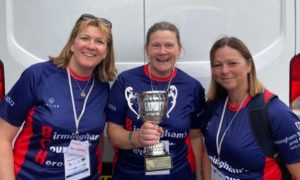
Race4Recipients